Plant autumn garlic from mid-October to mid-November, around three to four weeks before the first frost. At the Domači česen in krompir iz Gaberja farm, we plant in late October. Position individual cloves with the pointed end up, around 5 cm deep and 12–15 cm apart.
The short answer: the second half of October
Plant autumn garlic from mid-October to mid-November. On our farm, we plant every clove by hand in late October.
Alongside the calendar, we use the guideline of around three to four weeks before the first frost. This allows the garlic to begin developing roots before winter dormancy without already producing vigorous leaf growth. A single fixed date for every location is therefore less useful than combining the planting window with the approach of the first frost.
How planting time fits into the full annual cycle
Planting begins a period of around nine months in the soil. After autumn planting, the garlic lies dormant through winter, resumes growing in spring and is lifted in late June. This calendar explains why we prepare and dispatch seed garlic in late September: there is still enough time to plan the bed before planting.
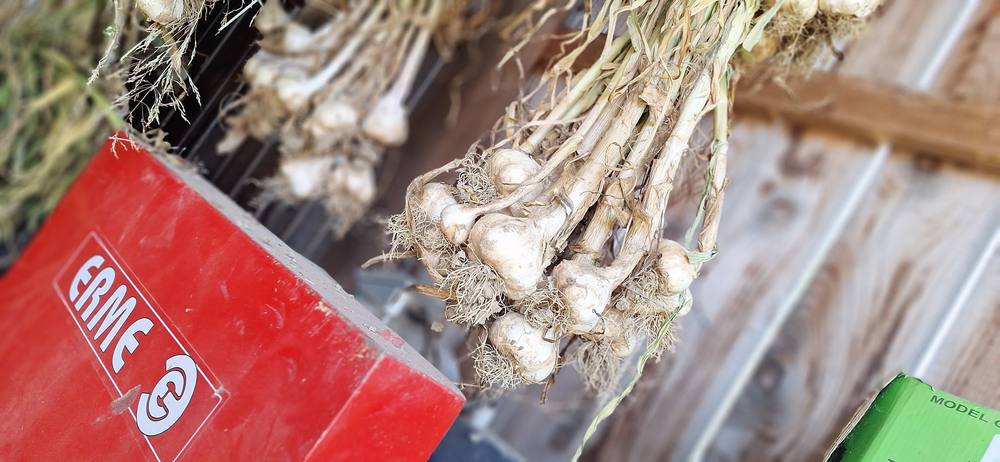
The work does not end at harvest. We leave the bulbs in the field for two days so the soil on the roots can dry, then cure them under cover for six weeks. Only then do we clean and sort the garlic and select the largest bulbs to keep for the next planting.
When to order and prepare seed garlic
We dispatch seed garlic in late September, before the autumn planting window begins. For planting, we select the largest, finest bulbs from our own harvest. The garlic has not been treated with sprout inhibitors and is ready for its intended purpose: separating into cloves and planting.
When it arrives, first decide how long the bed will be and how much garlic you need. One kilogram of seed garlic gives around 60 plants. At a spacing of 12–15 cm, that is approximately 8–10 linear metres of bed. These figures let you plan the quantity before planting day.
Check the cloves before you finish
Once your chosen date falls within the autumn planting window, separate the bulbs into individual cloves. Plant every clove separately. Place it with the pointed end up, around 5 cm deep, leaving 12–15 cm to the next clove. These are the same basic measurements we provide with our seed garlic.
If you have around 60 cloves, you can use spacing marks prepared in advance to check the layout as you work. There is no need to guess how much space a kilogram will require: start with the estimate of 8–10 linear metres and adjust it to the actual number of cloves from your bulbs.
What follows autumn planting
Winter dormancy begins after planting, followed by growth in spring. On our farm, we lift the crop in late June. Mark late June on the calendar when planning the bed.
Once lifted, the garlic is not immediately ready for long-term storage. It first remains in the field for two days and then under cover for six weeks. This part of the cycle also matters for future planting, as we only select the largest bulbs for the following October after curing and sorting.